Marmot Skull

Marmot Skull
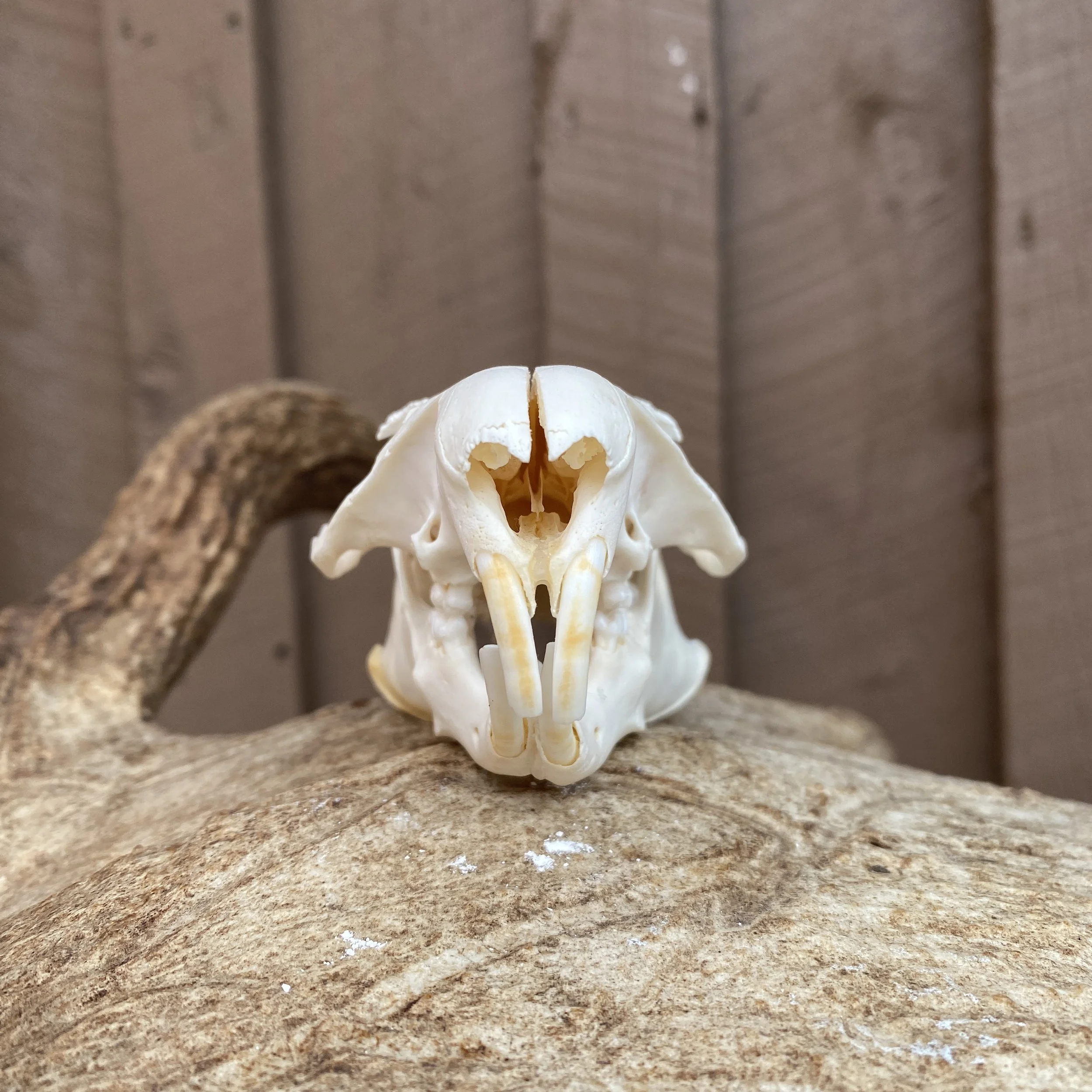
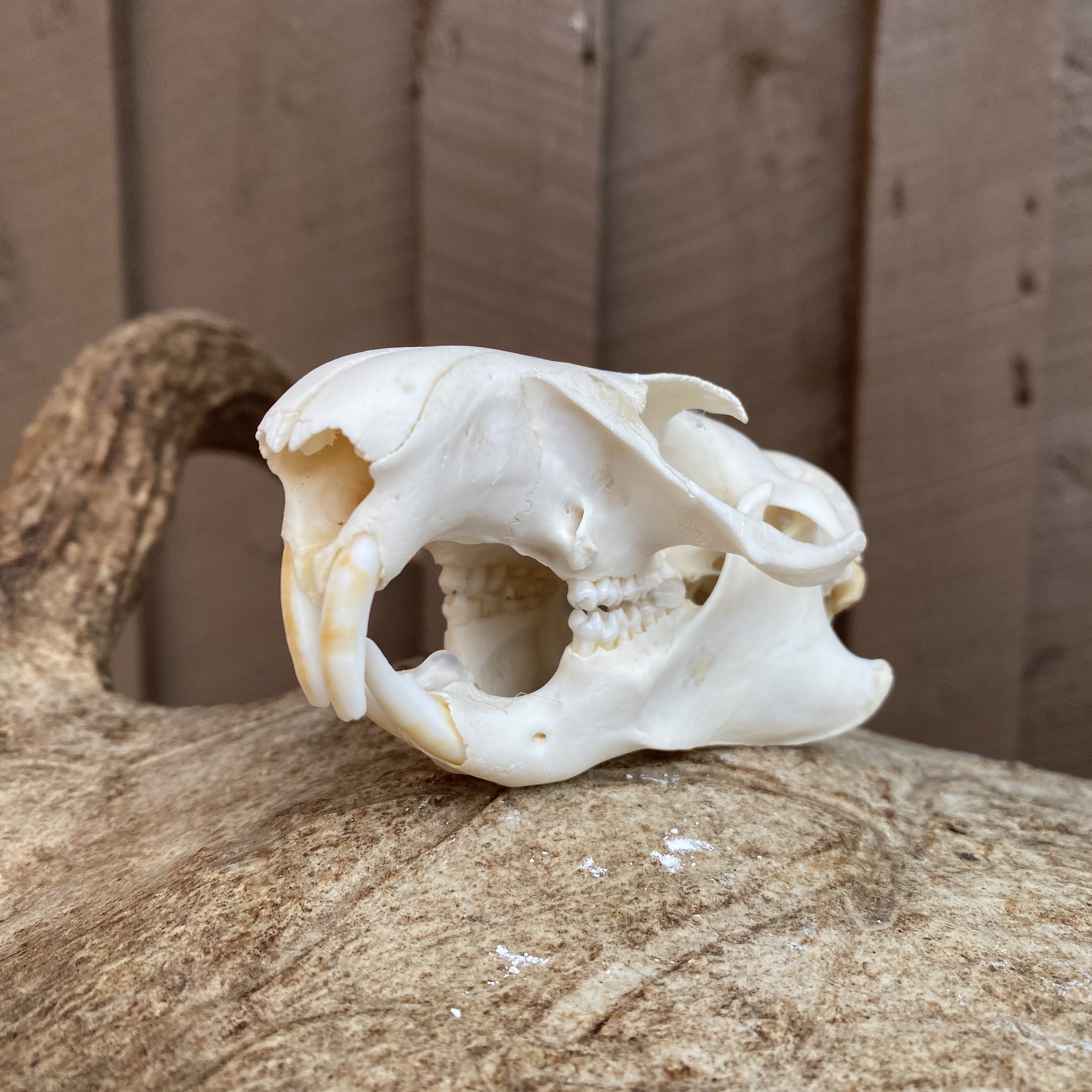
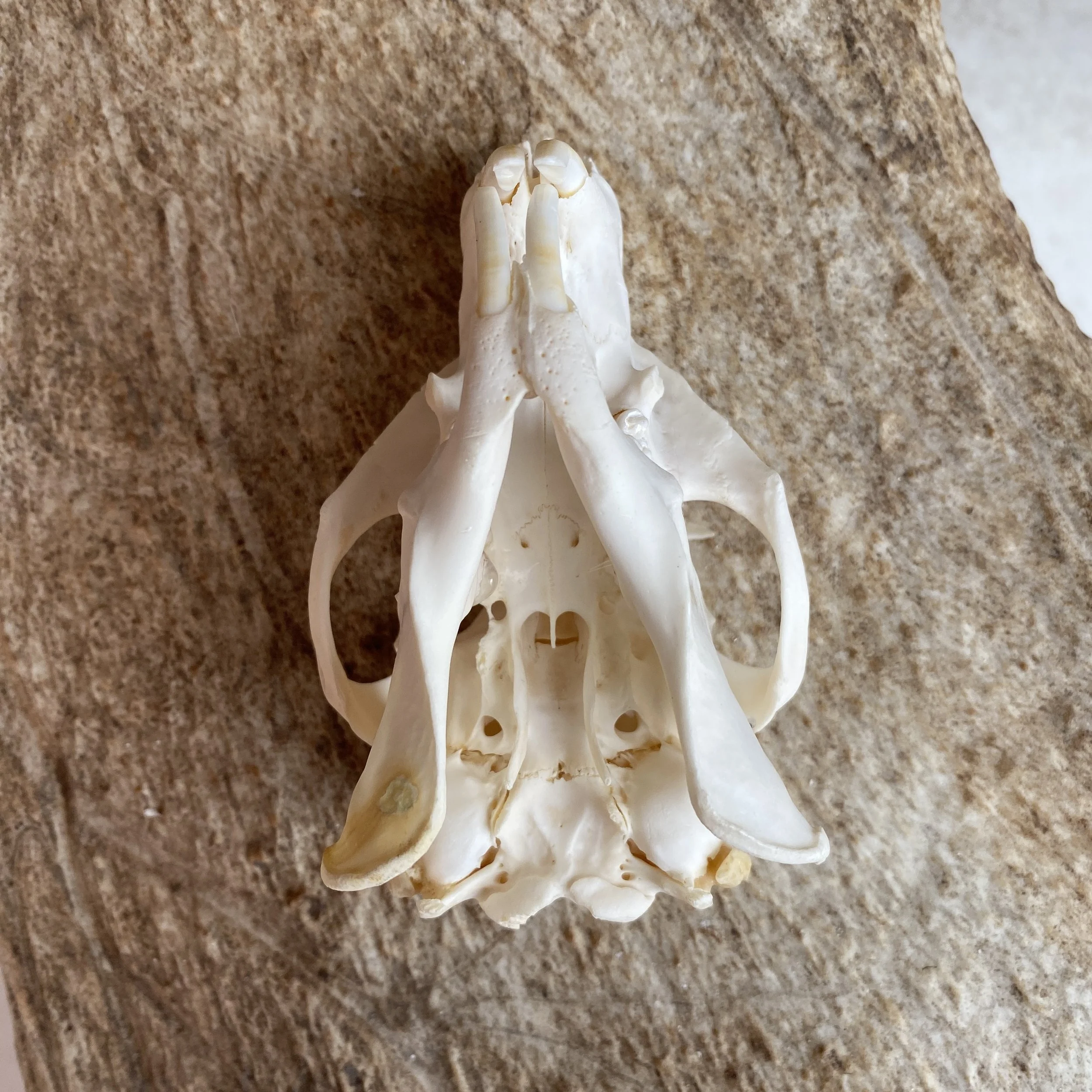
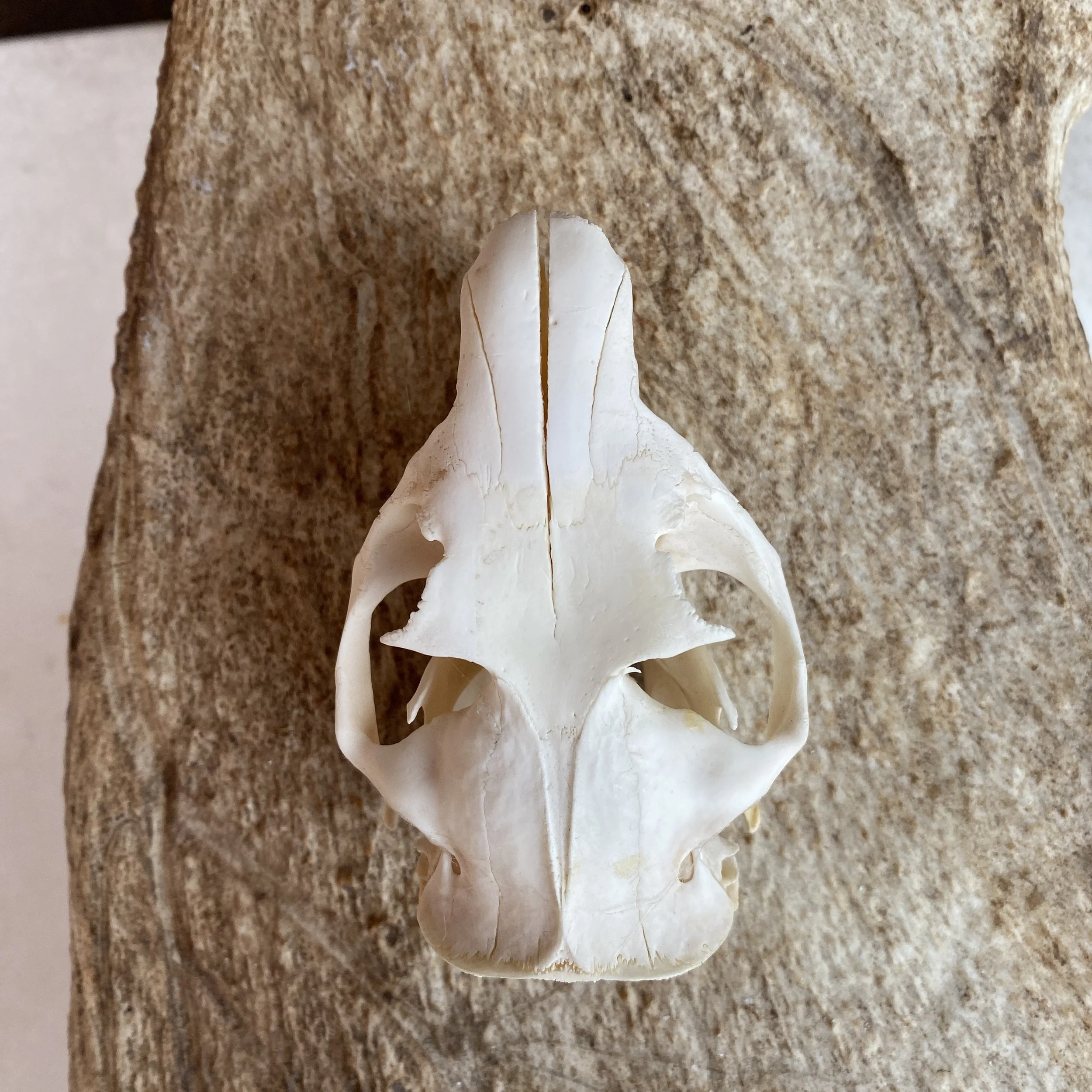
Marmot skull. Used for crafting, decoration in a house cabin or hunting camp, and classroom identification. All of our skulls are boiled to clean them. Then we use a whitener to cut the grease and get them nice and clean. After cleaning we use a small bead of hot glue to keep all the jaw in place. You can heat the glue with a hair dryer to remove it if you choose to.
The marmot skull is a distinct example of rodent cranial anatomy, characterized by its robust structure and specialized dentition adapted for a herbivorous diet. Measuring approximately 7 to 9 centimeters in length, the skull exhibits a pronounced zygomatic arch, facilitating strong muscle attachment for chewing tough vegetation. The incisors are ever-growing and chisel-shaped, ideal for gnawing, while the molars are broad and flat, optimized for grinding plant matter.
The braincase is moderately sized, reflecting the marmot's relatively simple behavioral patterns compared to more complex mammals. The nasal cavity is elongated, supporting a keen sense of smell important for foraging and predator detection. The eye orbits are positioned to provide a wide field of vision, enhancing environmental awareness.
Overall, the marmot skull presents significant adaptations that underscore the species’ ecological niche in alpine and subalpine habitats, where efficient processing of fibrous plant material and vigilance against predators are critical for survival.